Two souls collide
With more power than the sun
Because in the end
His will be done.
Though no one will know her name
She changed eternity
By making a mark on a young man
No longer free
Brideshead Revisited, the iconic novel by Evelyn Waugh first published in 1945, has seen a jarring revival that has shaken up the online world of traditionalism as it raises questions about aesthetics, ethics, and society as a whole.
Commonly known as Brideshead, this book, which later became a television series in 1982 and a movie in 2008, has entered the digital halls of discussion, taking on a cultural reference point that denotes that the speaker has an eye for aesthetics, though what else does it serve as a point for in discussion?
For those who are unaware, Brideshead Revisited details the life of a young English gentleman through two decades of his life, from the early 1920’s leading up till World War Two, as he dances through aristocratic life. He finds true friendship, genuine love, a sense of home, and an inkling of religion in a place far from his home back in London, the countryside of Northern England.
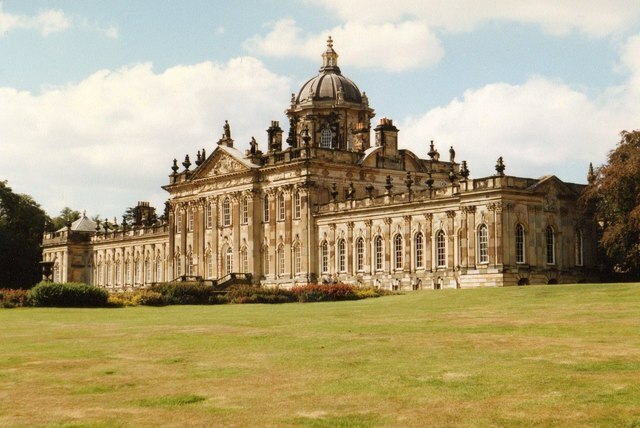
I would argue, that Brideshead is a starting point for a love of traditionalism for many, through the gateway of beautiful architecture, scenery, cinematography, and the aristocratic lifestyle of the early 20th century. Is such imagery not how so many people have become traditionalists? I myself can attest that in my early formation into the belief of traditionalism, I found the 2008 movie version to be incredibly compelling, if not on an ethical level, at least for the sake of the indulgence of the senses as I watched a way of life unfold in front of me. While the senses are not the way that one should decipher truth, it is often a good sign for the ideas being promoted, if they are objectively beautiful. Brideshead is such a narrative that it evokes an understanding that there are objectively beautiful places, moments, and lifestyles.

An understanding of beauty is not a prerequisite for reading or viewing Brideshead, it is freely given to you if you care to take it. Of course, many may idly rummage through this story in whatever medium they please never getting a grasp of what I speak of, but for those who have a mind open to the concepts of loftiness and idealism, then principles may take root deep within the imagery impressed into the intellect. Such a narrative inspires ambition, yearning, and a sense of emptiness that their life is perhaps not the way that they wish it to be. It is not the life of Charles or Sebastian from the story, it is not as authentic, it is not their own, and they are not truly living bountifully every day.

What does this make someone question? Perhaps…everything. If someone decides that they too, wish to live out their days as though they are encapsulated within the story, then they must inherently become traditionalist, for what is and forever shall be beautiful is known and has promulgated through tradition down to this very day. Therefore admitting that true beauty exists in a higher sense, they cease to believe in relativism. This moves them quickly away from the ideas of Marxism and other like ideologies that fall on the far left wing, immediately producing a profound divergence with modern society and their personal internal dialogue and worldview.
Well if objective beauty now exists, then that is an objective fact, and so truth must exist independently of whether we choose to accept it or stubbornly reject it. Therefore this lays the groundwork for another part of the narrative of Brideshead, religion. The Flyte family (the owners of the Brideshead estate which so profoundly shapes the main character, Charles Ryder) are traditional Roman Catholic, and this faith is touched on countless times throughout the pages, as we see marriage, divorce, immorality, and drunkenness to name a few of the vices, contrasted with piety, loyalty, family, art, literature, and church. Charles, an atheist, is confronted with these two aspects within one family, and begins to ponder and wonder why he is an atheist himself, when he is confronted by such devotion and beauty in stark contrast to his grey life back in London.

Now ascending the intellect to the question of the existence of God and human morality, one must ask themselves beyond these fundamental questions, how was such achievement produced in the architecture of the estate, the art within it, the procuration of the gardens, and the tranquility of such an aristocratic lifestyle, upon what was it built?
This is a question up for debate, but one begins to think about ideology, governance, politics, and of course, economics. How did these people live in such splendor, and what came about because of it? What was the end goal of a life of someone within the Flyte family from the story, or in the real world, any aristocratic family? The continuance of the family, the estate, the wealth, the unique familial oddities and traditions? The preservation of heirlooms? Surely these are all valid questions to ask, and are worth spending time pursuing, but what in the end, do we learn from Brideshead?
In my opinion, Brideshead Revisited teaches those who care to take up the story as something beyond exactly that, but rather as a philosophical cross to bear, that there is value in beauty, truth, religious piety, nature, temperance, romance, friendship, family, architecture, artwork, and overall refined living set in the ways of tradition unique to our heritage. Thus Brideshead Revisited becomes not only a jolt of traditionalism to those unaccustomed to such ideas and imagery, but also a living idea and way of life to replicate for traditionalists who wish to turn back the now scorched pages of time to an existence of existentialism, romanticism, intellectualism, and intensely vivid beauty.
““I felt that I was leaving part of myself behind, and that wherever I went afterwards I should feel the lack of it, and search for it hopelessly, as ghosts are said to do, frequenting the spots where they buried material treasures without which they cannot pay their way to the nether world.” – Brideshead Revisited by Evelyn Waugh

Featured Image: Keith Evans / Castle Howard Creative Commons Attribution-Share Alike 2.0 via Wikimedia Commons

Castle Howard, York by Mark Stevenson, CC BY-SA 2.0 via Wikimedia Commons

Mdbeckwith, CC BY 3.0 via Wikimedia Commons

Mdbeckwith, CC BY 3.0 via Wikimedia Commons
