Often when people think of the “darkest” places in the United States, places like New Orleans, Charleston, Salem, and Sleepy Hollow come to mind, but what about the Midwest? The Midwest is a region of the U.S. that is often overlooked, forgotten, or willfully ignored, not only in mainstream American culture, but especially when it comes to the mention of everything gothic and paranormal.
Well, what does this have to do with the humanities?
I would argue that at the very basis of philosophy, literature, music, and art, is grassroots culture, folklore, and good ol’ fashioned storytelling. I would further argue that every state in the U.S. has its own unique culture, that often shares aspects with other states near it, forming the regions in the country as we know them today. This is the case with what I like to call, the gothic midwest. As someone who has spent the entirety of their life in the midwest, particularly Indiana, I will speak on a couple points about how the gothic aesthetic is pervasive to midwestern culture, not just near Halloween, but all year.
Halloween
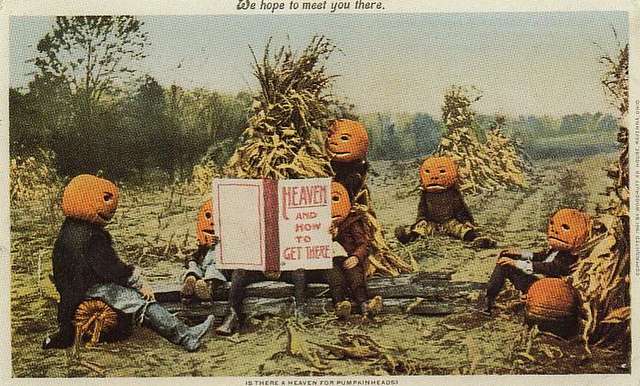
Firstly, I will address the obvious fascination that the Midwest has with Halloween. In countless places across the U.S. Halloween is a major event, such as in many places in New England and dotted areas of the South, but this holiday takes on a unique aesthetic in the Midwest. Starting in early September, one can feel the anticipation in the air as people look toward the impending season. Decorations quickly go up, fall treats are bought or made, and people enjoy themed activities. This is the commercial aspect that is well known to many people, but there is also the underbelly of Halloween and why it is so significant in the Midwest, largely based in aesthetics, heritage, and the paranormal.
The people of the Midwest are a mix of several different European ancestries, but most commonly are of German, Scot-Irish, and English descent. These places had a great deal of culture set in Halloween, storytelling, and the paranormal, but I want to focus on the aspect of a purely American Halloween, which is shaped by most importantly the land and the paranormal. One must walk only walk down a street in October in a small midwestern town at night to immediately understand what I am attempting to convey. There is a certain eeriness, morbidity, memento mori, remembrance of ancestors, and deeply rooted gothic Protestantism fueled by the Baptists, Pentecostals, and the like. While this is present all year in lesser form, it is at its height as Halloween approaches.

Ghosts
The next point to be made here is that the Midwest is drenched in hauntings. Every small town is filled with haunted buildings, ghost stories, strange happenings, and folklore that is increasingly disappearing with the older generations. Unlike other regions or big cities, the small-town midwestern man and woman not only believe through faith that the paranormal is real, but they have seen it with their own eyes, and have often lived right in the very midst of it. With so many houses being haunted, it is not uncommon for someone to know that they share their home with something that is not of the physical realm.

Suffering/History
Next, there is the deep-rooted melancholic morbidity of our people. Death is much more present in the Midwest, where Protestantism, family, the paranormal, war, conflict, and disease have all influenced several generations. Pictured below is a patient at Waverly Hill sanatorium in Louisville, Kentucky. I include this here as Wavery Hill is just on the other side of the southern border of Indiana, Wavery Hill is known as one of the most haunted places in the entire United States. There was immense suffering there by patients with tuberculosis of all ages and backgrounds. You can imagine the energy in these places with all that happened, the feeling, the imagery. Just by looking at the picture below, you can quickly see what I mean. Now, I do not argue that the Midwest is unique in having such haunted places, but rather it is the frequency of ours and its unique character with the people that makes it so different and set apart from the rest of the country. Further, there is such a long history of Midwestern people celebrating Halloween so fervently, that it is a deeply familial event, and a way to remember those who have passed on. Not in the sense that we believe that they come back that night, but like how at Christmas we would think of them, we do so at this time as well.

George Bailey/Courier Journal Image Source
Protestantism
Now why do I mention Protestantism as a feature of this culture of being close to death? Unlike Catholicism, Anglicanism, or Orthodoxy, American Protestantism is very much tied to the fascination with the gothic elements of life. In some of the areas of the country most prone to suffering, such as the Midwest, and the South, where many people moved to Indiana, Ohio, and rural Illinois, there is an extreme concentration of low-church Protestantism that is very focused on relatives and the afterlife. This grows into a fascination with death, and a strong culture of folklore. The history of America is very intertwined with Protestantism, and with the Midwest being the American heartland, this is of course true here as well, more so than any other place. Having personally grown up around this subculture of American Protestantism, it is mostly associated with lower-income or rural areas in the Midwest. An example of this culture that I think of is the constant thought of “the rapture” or the “second coming of Christ” along with associating happenings in nature, such as believing that a cardinal bird sitting outside a window (the Indiana state bird) is a loved one who has passed away coming to say hello/visit.

Music
Now this music is not unique to the Midwest, but it gives an exact musical aesthetic background to what I am speaking about. I have provided both a very old example, and a modern one. If you are interested in diving into this aesthetic deeper, you can listen to vintage Halloween music on YouTube, as there are plenty of very good playlists on there.
Conclusion
In conclusion, the Midwest has a unique form of gothic identity and culture that can be identified for the reasons listed above, among countless others. While much of this identity is “native” to the state, it also is due to a very strong southern and Appalachian influence, due to the geographic area and historical intermigration between states. This unique identity and culture allows for an increase in existentialist, nihilistic, and romanticist perspectives within literature, art, music, and overall creative expression within the humanities.

