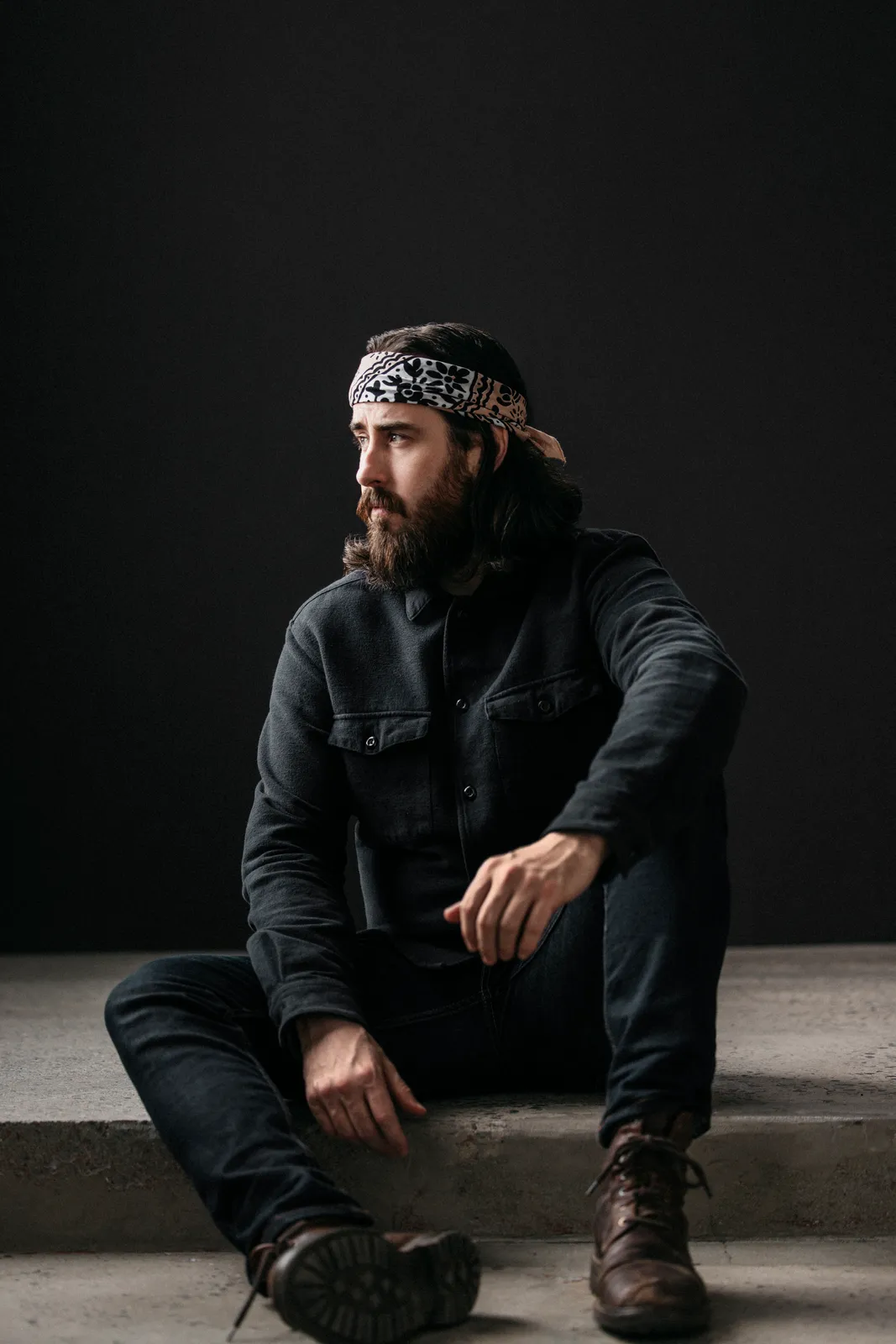
Sometimes the inspiration to write something you have been meaning to for over a year just hits you on a random night, as was the case with this. I have been listening to the music of Mike McKenna Jr. for the past three years, in fact, and it has continually amazed me how such an amazing vocalist, songwriter, and overall artist is still overwhelmingly unknown. Hailing from Cape Breton Island in Nova Scotia, Canada, McKenna is a captivating storyteller who provides a neo-traditional edge to the modern folk scene. With four albums under his belt, his newest release in 2024 is entitled Smokey Mountain High.
McKenna, throughout his discography, delivers a truly exclusive sound that reminds one of a stripped-back Noah Kahan, infused with the songwriting of Sean McConnell and the authenticity and versatility of Justin Townes Earle. Ranging from historical narratives following Canadian loyalists in the American Revolutionary War, to stories of immigration to the New World, to countless introspective, lyric-driven songs with melodic acoustic backing, such as his most popular, Pacific Northwest Bound. While I am a committed fan due to all of his albums, I am admittedly most fond of his first album, Pacific Northwest Bound, released in 2017. While most artists change, or even decline, over time, McKenna continues to impress. If McKenna were a stock, I would be investing heavily.
McKenna brings a much-needed neo-traditional take to the modern folk music scene today. A proud Nova Scotian, he utilizes his deep roots in the industrial area of Cape Breton to inform not only his lyrics but the general tone of his music. It is one thing for the music of an artist to reflect their native region in its lyrics, but another for the underlying acoustic aesthetic to provide the bass note, if you will, for the lyrics to formulate. Using the musical heritage of his geographical area, I believe that McKenna carries the torch of Cape Breton music well, especially in the modern folk context.
Modern listeners will be familiar with Noah Kahan’s northern New England aesthetic that he touts in his branding and lyrics, but I would argue that McKenna is the far more positive, historically grounded, and traditionally authentic artist. Folk listeners do not want a recreation of what was being made in the 60’s revival, but rather something genuine, and that is what McKenna provides. Not every song is intended for the radio, but for those who listen for artistry in every track, they are sure to strike gold time and time again.
For those familiar with Sean McConnell or Justin Townes Earle, they will no doubt notice the similarities in storytelling and introspective lyricism. While I would not label McConnell as folk inherently, JTE was solidly in the folk and Americana categories. McKenna reminds me of JTE in the best way, in that he utilizes historical themes in his narrative tracks, not simply for effect, but to build entire musical landscapes. Similarly to JTE, he uses his own native region to fuel these historically focused songs, while pairing the next track on the album as a deeply emotional, lyrically driven midnight confession.
Mike McKenna Jr. is, without a doubt in my mind, one of the most promising up-and-coming folk artists on the scene today. It is shocking to me that I say up and coming, because as soon as you listen to him, you will see that the quality of production, lyricism, and his maturity as an artist are that of someone who should have hundreds of thousands of monthly listeners on Spotify by now. It is a testament to his artistry that he has remained true to his exclusive musical style, delving deeper into exploring his identity. I eagerly watch in anticipation to see his career take off, releasing more albums that show us the world from a musical viewpoint that only he can.
You can find his website here.