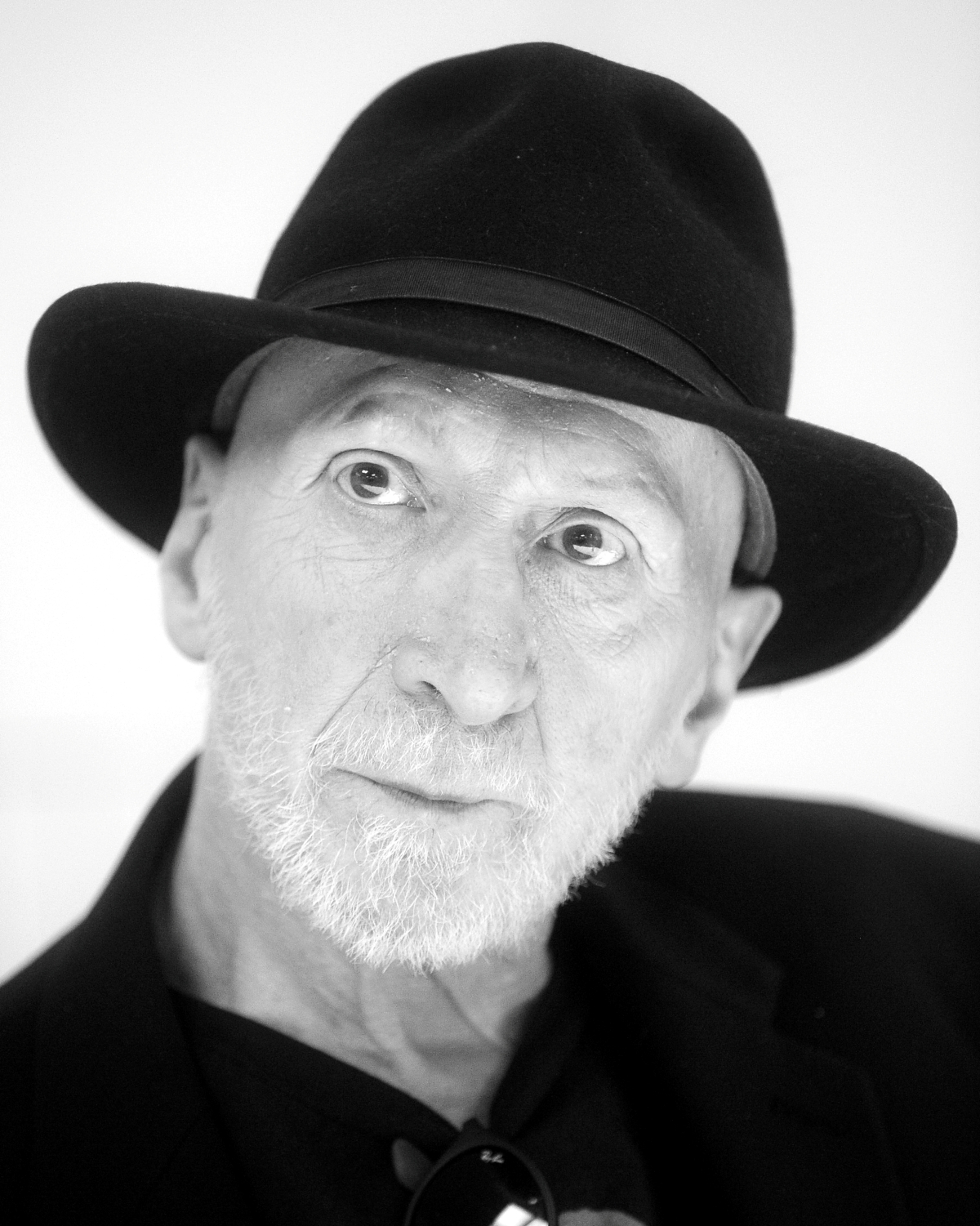
Writer and filmmaker Frank Miller may not be as famous today as when his graphic novel 300 became a movie in 2006. Still, he remains one of the key writers who has shaped how American culture talks about heroism. His influence extends from adaptations of his work (Sin City, Marvel’s TV show Daredevil, any Batman movie since the 1980s) to numerous storytellers influenced by his work.
Since Miller has been a provocative public figure and his stories often sparked controversy, his name provokes many reactions. Many fans remember iconic moments from his stories, like Leonidas yelling “This is Sparta!” as he kick-boxes a Persian emissary into a well. Others remember how dark Miller’s characters can be, like a middle-aged Batman pummeling Superman in The Dark Knight Returns or police officer John Hartigan literally beating a serial killer to a puddle in Sin City.
My first thought when I think of Miller is a quote by Oxford medievalist C.S. Lewis about heroic narratives. In “The Necessity of Chivalry,” Lewis argues that the key difference between medieval knighthood stories and pre-Christian warrior stories is that the knight’s ideal is to be ruthless in battle but also merciful to civilians.
“Homer’s Achilles knows nothing of the demand that the brave should also be the modest and the merciful,” Lewis writes. As Samuel Tallen writes, this flaw means Achilles swings between excess and regret. In contrast, a knight like Lancelot seeks to balance modesty and bravery.
Lewis admits that the ideal to be “fierce to the nth and meek to the nth,” is not easy. “But if it is not possible, then all talk of any lasting happiness or dignity in human society is pure moonshine.” Chivalry is key to producing a culture where people do not swing between being bullies and cowards. It is the median between the most common extremes that humans follow.
Looking over Miller’s work (and I say this as a fan), I find its most interesting and most conflicting element is how he becomes more interested in the thrill of living only by extremes. His early stories offer heroes who use restraint or lean into paradox, like the hero surrounded by crucifixion imagery in Daredevil: Born Again. But the more Miller stepped away from Catholic-informed Daredevil stories, the less he wrote about heroes walking a moral line separating them from their opponents.
With The Dark Knight Returns, a story about a middle-aged Batman taking on city bureaucrats and later old friends, Miller became more interested in warriors finding the line, playing jump rope with it, then throwing the jump rope away.
As various critics and fans have noted, these stories (the Dark Knight Returns sequels and prequels, the superheroes-vs.-Al-Qaeda story Holy Terror) eventually became more garish than interesting. Miller admitted that many issues (coping with unexpected fame, 9/11 trauma, alcoholism) caused his work to decline. However, it’s interesting that most of these stories feel imbalanced not just because of clunky dialogue or weird twists, but because they offer little between valor and cowardice. The heroes are either loving or fighting, not much in between. A very pagan approach to heroism.
Given how pagan Miller’s stories became, it is key to notice how he handles classical material in 300. By his admission, Miller offers a stylized take on the ancient Spartans, shaving off some of their society’s complexities. Intentionally or not, the result is a story that makes pagan valor larger than life, without offering much critique. In this fun but brutal romp, it is unclear there is anything messy about the way the Spartans mock their enemies as they boast about dying. The warriors die, their deaths are glorious, that is all there is to it. Fierce to the nth degree or nothing.
While the heroes of Sin City live in a more modern world than the ancient Spartans, their lives are essentially pagan: killing or sex without much in between. There are moments where heroes meet bystanders and show mercy to them. However, it becomes harder as Miller’s series goes along to name a bystander who doesn’t die or become the hero’s paramour (or both). The exception to this rule is Nancy Callahan, an 11-year-old whom the aforementioned John Hartigan rescues from the serial killer. But Nancy grows up to become a nightclub dancer, so the sex-or-death ethos still applies.
Granted, Sin City is a postmodern riff on noir fiction, a genre in which sex and violence always motivate the stories. But where some writers remix noir to offer nuance, Miller narrows the noir universe down to two kinds of people: killers (benevolent or psychotic) and their lovers. Miller’s noir hero is more trenchcoated Achilles than the trenchcoated Lancelot Raymond Chandler imagined when he wrote about the honorable detective who is “neither eunach nor a satyr.”
If Sin City makes a pagan warrior ethos seem fun, it is partly because Miller uses an already extreme genre to tell extreme stories. His later works not based in noir settings feel grotesque. Violence against villains with no clear sense that the violence is anything other than vengeance. Characters undergo pain without any particular point. Miller’s moral universe turned out to be a bit one-dimensional without a clever framework to make violence into an in-joke.
The problem becomes obvious in Xerxes, his follow-up to 300. Halfway through the book, the Babylonian king going through defeat, then new purpose, then death… over a few pages without a clear plot holding these events together. All the peaks and troughs of a warrior life without any tension to offer meaning to the story.
The question that Miller’s work raises, of what happens when stories about heroes become about toughness and only about toughness, has become especially interesting today. Pagan heroism is having a moment, particularly among young men on social media debating what separates a “strong” pagan man from a “weak” Christian one. Reading Miller’s best work, and his later work with all its excesses, reminds me that understanding Christian versus pagan heroism matters.
