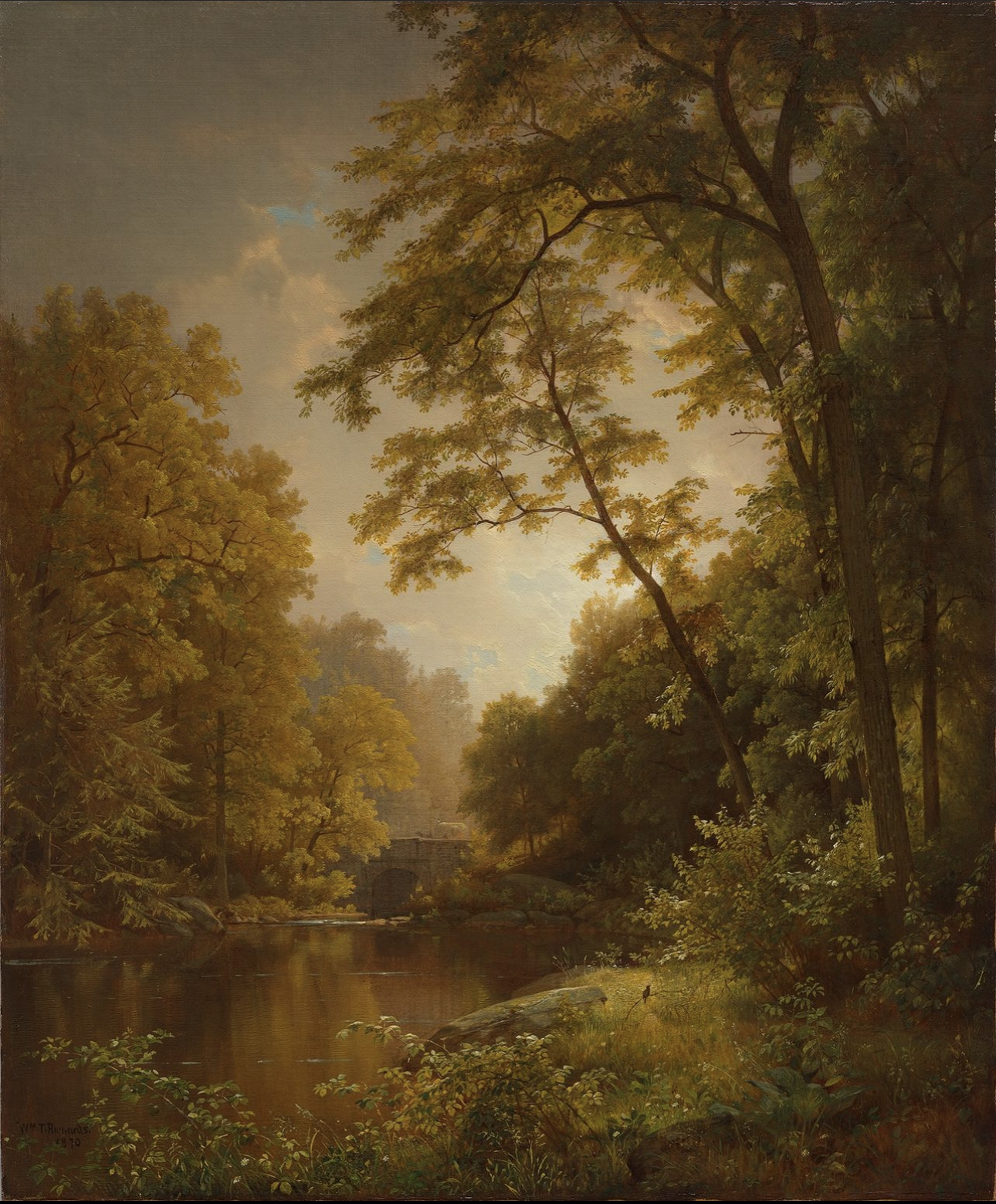
“Beauty is eternity gazing at itself in a mirror.
― Kahlil Gibran in “The Prophet”
But you are eternity and you are the mirror.”
Introduction
In the end, life and existence are two different states of being. As one may be very well alive, but not exist among us. Or they may exist, but not be alive among us, but they could not be alive and exist and not be among us, save for the situation of a coma where a communicating level of consciousness is not present. While one may argue that what I am proposing is paradoxical semantics, it is rather a way of viewing objectively the state of being itself.
How do we define someone as being alive? For the sake of this essay, I define someone as being alive as being present in the mind and body, being able to communicate. I do not include those who are unconscious, such as in the state of a coma, because though their bodily functions continue for a time, they are not self-sustaining and are unable to communicate. Someone may be near death, but still very much alive. If one has a beating heart and can speak, they are very much alive indeed. Therefore what defines this state of being is that consciousness is present in the body, which is the primary form of existence that humans possess.
How do we define someone as existing? This is far more tricky, because we now enter what is largely uncharted territory as far as I am aware. We exist if we are alive, but that is not the only way that we exist. A human may exist in writing, audio, video, photograph, bodily, memory, and, emotional energy.
Forms of Existence
When I address these different forms of existence, they are post-mortem. First, people, humans, continue to exist bodily after their death, whether that be in a coffin or their ashes. Though their physical composition is altered, the person still technically exists.
What about in writing? Those who are avid readers will understand what I mean when I say that you feel as though you know your favorite author. To feel such a close connection to someone, to get an understanding of them, is a continued existence. You can not understand someone who does not have at least partial existence, because due to their very existence, they wrote the book that you read from them, which allows their writing which they poured their soul into, to go on. Thus people will often talk about how they feel that they are able to “communicate” with their favorite authors from the past. Why am I writing this essay? I write it for my own processing of thought, but also knowing that it will continue to exist after me, as long as we have the internet, or wherever else this may be published. While the literary state of being is contingent upon the medium, whether it be a book/printed form or website being accessible, it is nonetheless an existence.
Next would be in the form of audio. Do we not feel close to our favorite musicians who have passed on? They exist in their music, which is yet another form of literary existence in a sense. We listen to them, we feel their words. Beyond music, if we have audio recordings of our loved ones or people we know, does that person not exist in that audio? Someone is speaking, therefore there is a flicker (I so happened to have a song named Flicker playing as I wrote this) of existence.
What about video? Well of course, in the video we can see someone moving, or often speaking. That is an existence within film or digitally. They truly come alive to us in video. Do you not see how they exist within those frames? Sure, it is a limited existence, but they are still “here”.
Look at a photograph of someone, as this may be one of the most striking examples, and the one that made me actually write this essay, which I had been meaning to write for over two years. Look into the eyes of a person in a Victorian photograph. That is a snapshot in time, a glimpse of existence. It is an existence that continues as long as that photograph remains. Bonus if it is a Victorian photograph, because it has lasted well over a hundred-plus years already.
Now we enter the realm of memory. Do you remember that first love, all these years later? Do you remember that man you saw at the train stop five decades ago, or the old man at the grocery store pushing the carts in the cold? They exist within you, deep inside. You can describe who they are, you can feel them, though perhaps for some of the people, you have never even spoken to them at all! A memory may survive much longer than any of the physical or digital forms that I have mentioned previously in this essay, as it is transmitted in its most complete sense. Tell someone about that person you remember from long ago who has passed on. Now a memory has been made within them, deep inside once more. They may forget the memory, or they may not, but now the existence of that remembered individual is continued on for another lifetime!
At last, we reach the theory behind this essay, which I have been working to expound upon for over 730 days. Yes, look up how long that is, or rather think about it, it is good to use the brain for hard things.
Existential Emotional Energy
As far as I am aware, this is a completely new term, which we as writers/philosophers do not get to do often. So what is existential emotional energy?
Existential emotional energy is what you feel when you enter that old historic house, revisit the spot where it all began with the one you love, the room you grew up in, or the storied battlefield where so many died.
It is that feeling that you can’t describe, beyond nostalgia, beyond a sense of time itself. I know it well, and I am sure you do too. I think we all have those moments in our life that cement this “energy” into a physical location, forever. I would say that we do not just cement this energy into a place for our existence, but for others as well.
When you enter a historic house, (which in America often, fortunately, become museums for the public), before you are even told what has happened in the house, or what occurred to the family or families who have lived there, you feel something unmistakable. You can’t quite explain it, and you can’t quite shake it. It stays with you, as you wander from room to room. Perhaps each room feels different, and as it should, the feeling within your innermost being alters. Each room with a different feeling, or rather, a different existence. For some of us, images come to mind that almost feel like they are placed into our consciousness, without any thought of ours whatsoever. Perhaps you feel transported back in time, right? Some people may read this and think it is absurd, but perhaps they have never experienced it. For those who have though, you know what I am speaking about, and you are relieved that someone has spoken up.
As you walk into another room, you feel…different. The tour guide tells you that a terrible tragedy happened in this room over a century ago, or maybe it was instead a joyous event. Whichever it may be, you know how you feel. It will not leave you, but rather clings on to you at every turn, more and more. You did not have to have someone tell you that this room was different than the library, it was clear as day. I should add, that it is not just an overpowering feeling that is experienced, but also a conscious understanding that feels timeless. Perhaps you even feel like the owner of the house is about to walk in and talk to you.
It is not just you who feels it, so what is this phenomenon?
When you return to that spot where you felt true love, does it not all come rushing back to you? Some may say it is nostalgia or just plain and simple memory, but what if you see every blade of grass, every bird that chirps, and remember how it felt as though time stopped? Maybe this just exists for you, in this lifetime, but perhaps for someone else in another lifetime, they stop at that spot because it just feels “different” as they look up at the stars.
Have you not experienced this?
Metaphysical Imprinting
Most compelling to me, is a battlefield. Do we not call these hallowed places, sacred land? This is our best attempt to describe this land that is drenched in memory and existential emotional energy! For those who live in America and have walked a Civil War battlefield, you will know what I mean. Before you hear about the number of men who died, or the impact of the battle, you feel the presence, you feel eternity. I often wonder if existential emotional energy is an explanation, beyond the Christian answer of demons, to the existence of ghosts or spirits, but I will not speculate beyond a mere mention of my ponderance of the concept.
Perhaps in your mind, you can hear the yelling, the chaos, and yet at the same time your eyes show you the green rolling hills. Was this place really, truly, a living hell? Your eyes say it is not possible, but your soul writhes in perception. Your being conceives of pain that your intellect cannot.
Have you felt their suffering?
Humanity itself is filled with an energy that pours into each of us every day, like a tide coming in and out, but for those special places of which I speak, they do not need replenishing.
I believe that this existential emotional energy imprints itself onto a physical place, or onto physical items. Whether it be that place that was special to someone due to an event that happened there, or where great pain was caused, or even their favorite item. I believe that this energy, in some way, though I do not know how, embeds itself into the nature of existence itself, into being itself. An example of this is a soldier dying on a battlefield during the American Civil War. That soldier is in a great deal of agony and pain, likely both physical, mental, and spiritual. That place is going to become hallowed, as he passes away and heads past the comma that is death into the next life. Now multiply this individual suffering, the archetype of the dying soldier, by a thousand, or in some cases, tens of thousands. Truly that is hallowed ground, where energy has been imprinted forever, for eternity, till kingdom come.
Christianity As Proof
I felt this way about existential emotional energy long before I ever became an Orthodox Christian, but I see a similarity or comparison between the way that the Orthodox view saints and their relics, and the greater world and humanity at large, or as a whole. Traditional Christianity completely affirms this entire idea, though in spiritual rather than secular terms.
People who adhere to Orthodoxy and Catholicism, along with other traditional groups, would historically, and continue to till this very day, make pilgrimages to places of importance within Christendom. While this has a deep theological significance, it also mirrors what I am speaking about in regards to places that radiate “energy”. An example may be a place where a saint was martyred, or where an important event in their life took place, or even their burial site. These are places where the faithful go to venerate these saints and to ask for their intercessions, as well as to often venerate their relics. What exactly are relics? Items that hold significance related to a saint or particular event allow the faithful to become closer to that person or event. Thus we see that places and items that are associated with saints have an “energy” imprinted upon them. While of course this is speaking in simplified terms and is not getting into the theological aspects, the premise is that the existence of imprinted existential emotional energy is in fact a reality within Christianity, and historical Christendom. Again, although the example of Christianity is in a spiritual sense, it proves the fact that the premise that energy can imprint itself onto a place or object is in fact valid.
Conclusion
Therefore to conclude this essay, I ask you to consider what I have written with an open mind, a perceptive heart, and a truthful soul. Do not forget what you read just because you click off of this page or leave it behind. Invite your intellect to consider, is this really true, and what do I think?
“In hope of eternal life which God, who cannot lie, promised before time began.”
Titus 1:2 (NKJV)
