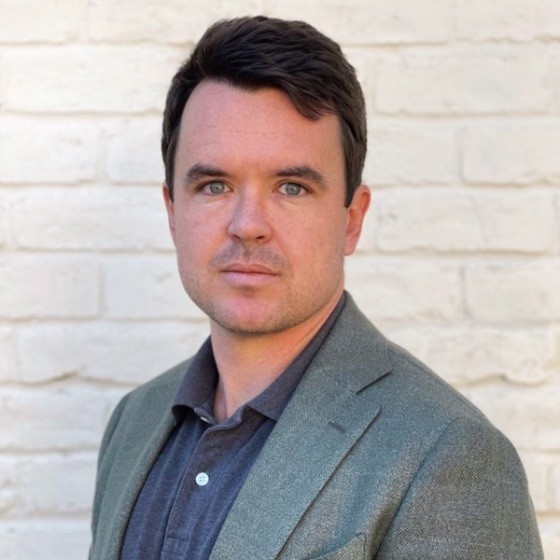
Josh Abbotoy is a Managing Director at New Founding. A seasoned private equity lawyer by background, Josh is the grateful beneficiary of a Christian education, having been homeschooled, then earning his B.A. (History) from Union University and an M.A. (Medieval and Byzantine Studies) from the Catholic University of America before earning his J.D. at Harvard Law School. His writing has appeared in American Reformer, the American Mind, and the Federalist, among other places. Josh lives with his wife and four children in the Dallas, Texas area. You can find him on X here.
1. How did your upbringing influence your work with New Founding and Ridge Runner?
“I was homeschooled by a former hippy turned conservative Christian mom, and raised on a hobby farm in rural TN. I was given an outside-the-box view of things from an early age – formation I am now deeply grateful for, as the crumbling status quo in late-modern America requires a certain cognitive flexibility.”
2. Why do you believe localism is so important, specifically in the highland rim?
“As mainstream institutions and large cities become increasingly inhospitable to American Christians, localist strategies are necessary but not sufficient strategy. Our focus on the Highland Rim is what you might call a regionalist strategy – engaging an area selected for affordability, beauty, compatibility with existing residents, and friendly state governments. It is correspondingly more broadly pitched – we are not aiming to build a community centered around one particular Christian institution, so much as inviting many particular families and institutions – who share a general alignment – to build within the region.”
3. What is unique about the highland rim that makes it valuable?
“I think everyone should be from a place they are proud of, and aspire to hand a place like that off to their descendants. So why the Highland Rim in particular? It is the kind of place that can get in a person’s blood. Achingly beautiful, temperate weather, great for farmsteading and all kinds of outdoor-oriented activity. It’s very affordable relative to national averages. And more than that, the existing culture of the Highland Rim is as heartland America as it gets. It is just close enough to Nashville and other emerging economic centers while still retaining very real organic connections to an older America.”
4. What has been your biggest success so far with New Founding?
“Before pivoting to a full-time focus on real estate, I helped to create and launch New Founding’s Venture Fund – a fund that is backing early-stage companies that will build the kind of America we all want to see. While I remain involved in New Founding’s Venture Fund, I have pivoted the bulk of my executive time to real estate since late 2023 as we started to see strong demand for aligned communities. New Founding has assembled a potent network, and I was able to leverage that network to tap into a national network of aligned businesses, community leaders, and potential residents to recruit to the Highland Rim Project. In some respects, the Highland Rim Project is a use case of the New Founding Network that we hope to see repeated.”
5. Do you believe that people will build parallel institutions, or has this already happened?
“You need to situate yourself within institutions that you can trust. In some places, this requires you to build new institutions. In other places, you can join and strengthen existing institutions. I think the Highland Rim Project will generally involve the latter at the local level, especially at first. That said, the Highland Rim Project will be part of a broader project to create aligned communities nationally, and help to serve as a platform where aligned start-ups can be incubated and grown. It is also a proof of concept. As that concept is deployed in more locations, I expect that there will be an organic emergence of new institutions.”
6. How are New Founding and Ridge Runner compatible? (Urban vs Rural)
“First and foremost, New Founding is a venture firm. Our vision isn’t intrinsically urban or rural, but is animated by a substantive vision of the good life – a traditional American way of life centered around family, faith, and freedom (exercised in accordance with virtue). For some people, the trade-off involved with big city life is ceasing to make sense. It is hard to lead a high-agency life in a city in some ways; even a very big fish can barely change the environs of a megapolis like NYC or LA. But on the other hand, technology now enables very high-agency rural lives. Investing in regions where generally-aligned Americans can gather and predominate has the promise of creating “Cities on a Hill” – exemplars of a better vision for the whole country. Rural areas are more attainable targets for this sort of project, and the demand is there. But ultimately, a rural strategy is not sufficient. To use a tactical metaphor, rural projects can be operating bases. Places where, in greater security, new businesses and institutions can be spun up and deployed.”
7. Do you think that outside investment will materialize traditionalist projects?
“Outside investment has often been a sine qua non for pioneer projects (people forget that the Mayflower was financed by proto-venture capitalists!) But I think the opportunities are even better when the capital partner is especially aligned with a particular cultural project. We are attuned to what our customers want in their civic life, because it is what we want too. I think that will give us a leg up as investors, and more importantly, achieve a goal of creating healthy and aspirational communities centered around the traditional American way of life.”
