Humanity stands at a perilous crossroads, where the scales are tilted in the spiritual war between good and evil. One path may lead to an eventual flourishing of humanity, not from idolising material wealth, but more importantly, from a flourishing spirituality (which modern civilisation lacks). However, the other path contains the narrative and technological reality that the creation of artificial intelligence (AI) will become so powerful that we will lose our sense of agency. If the Silicon sages and the like trod along blindly to create God-like AI, this path will inexorably lead us to a state of servitude to this technology. Not in a dramatic, Matrix-esque fashion (though the dystopian scenario is not entirely implausible), but in an insidious manner. Our focus, our very attention, will be shackled to the new deities a future society may revere, the AI Gods.
The current emergence of new technological deities represents a significant shift in our world. Today, some are already participating in the myth of Narcissus through the recent technological development of the smartphone. It’s the story surrounding pride before the fall and the intellect blinding us to the wisdom of the past. The ego can deceive one’s ability to perceive the inner fountain, thus deifying technology and superficiality. But that’s just the beginning; those who lack spiritual discernment, the ability to appreciate nuance, and hold an overly materialistic view of the world will find themselves naively facing profound dismay as these new Gods assume more significant influence over our lives. As the all-powerful machine-like entities assume control, those who fail to foresee the implications of this technological revolution may yearn for a world that is more wholesome, a more fulfilling world that mirrors their unconscious projection of the heavenly Jerusalem.
But is this a mere wish, a futile longing?
Can these machine Gods be redeemed and transformed as part of the timeless Heavenly Jerusalem?
The history of the world is a powerful reminder of what was.
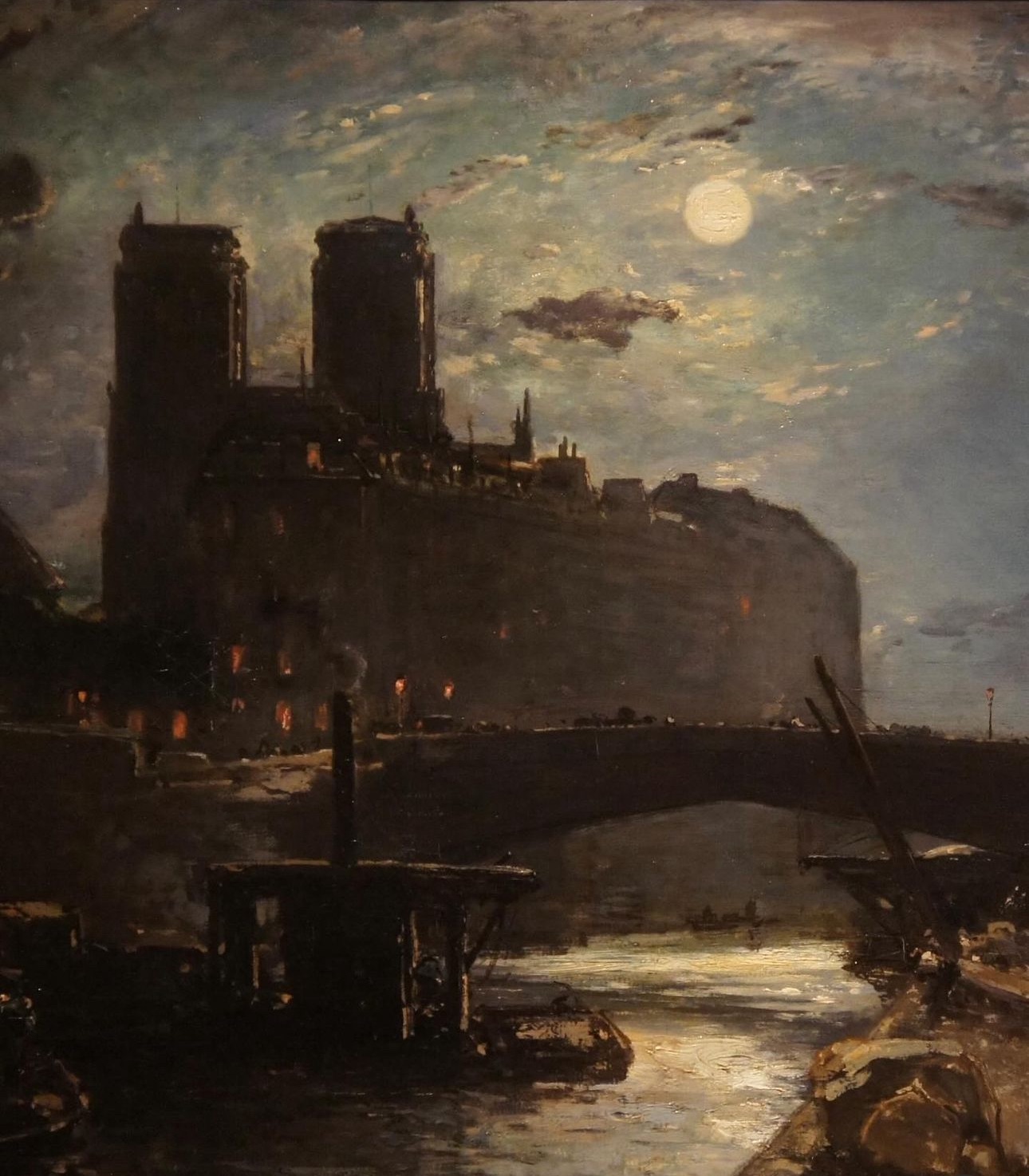
Some in our Western world continue to look at the past in hateful ignorance, but if we try to be impartial, we can see forgotten goods of a previous age that could be integrated back into the culture. For example, consider medieval times and how the sacred was intertwined with the Kingdoms of old. The highest structures throughout Kingdoms in Europe were the churches and cathedrals, which loomed above everything else. What did these old Kingdoms symbolise?
The Kingdom symbolised its union with the sacred, God, Christ and wider Christendom in the European context. Now, focus on the modern West, where ‘progress’ is always the aim, regardless of the cost. The impact of this bullet train of cultural development has flipped sacred principles, as described by Rene Guenon. Whether consciously or unconsciously, modernity mocks these sacred principles in the clear cultural void of comprehending spiritual realities such as virtue and sin. In the end, in today’s exoteric dimension, the facade of the West’s aim is greed, which is connected with the worship of the economy and its monetary gain. The tallest buildings in modern cities typically depict a financial centre of sorts, a key symbol of our day and age. It’s the story of Mammon, which is the worship of money.
“No one can serve two masters, for either he will hate the one and love the other, or he will be devoted to the one and despise the other. You cannot serve God and money.” Matthew 6:24.
Back to the planned AI vision and to consider Elon Musk’s fantasy outlook. A future where humanity extends its dominion to the planets and the stars, becoming the ‘Gods’ of the universe. But what lies beneath this unconscious projection, this ultimate aspiration? Is it merely a game, a challenge to be pursued until we reach the pinnacle? And what lies beyond that summit? Maybe gnosis, further knowledge of the divine puzzles of the cosmos.
However, when we think of the end game of transhumanism, this mission dovetails perfectly with so-called philosophers such as Yuval Harari, one of the famous talking heads of the World Economic Forum. It advocates the ideology of a dark result of revering materialism/atheism, which is naturally one-dimensional in its standpoint and dismisses the innate need for Religio, as Carl Jung elaborated in his work. In Yuval’s worldview, most humans are seen as lowly hackable animals. Humans are ripe to be manipulated either for a form of futuristic techno enslavement or the complete liberation of the confines of the biological body through the physical integration with technology, an outcome of transhumanism.
Elon’s worldview is inevitably the same, but instead of approaching the issue from a symbolic ‘Satanic’ pattern of things that seems clearer with Yuval Harari’s vision and the like, Elon comes more from a symbolic ‘Luciferian’ pattern of things. Elon may offer certain goods regarding cultural commentary regarding the West, but conclusively, the outcome of human beings being hackable creatures in Elons worldview is all the same. Through technological innovations such as Neuralink and his proposed product telepathy, the shackles are unchained as to where this technology will lead humanity. One road may be an underclass of humans that worship a Nietzsche-esque Ubermensch division of beings that have lost their humanity to become God-like in their integration with the future dynamism of technology. Another scenario is that humans will eventually become subservient to AI Gods that rule man in their cold, calculated creation. The AI Gods that rule may still be reminiscent of the Pagan Gods of old in the negative sense, with various capabilities and capacities to draw one’s free will.
However, as doom and gloom some versions of the technologically advanced AI world could be, man may still carry the archetypal patterns embedded within the depths of the collective unconscious. These patterns are not stuck solely in our biological design but go beyond our brains through our connection with the cosmos. We can not simply bend the fabric of reality without punishment and due consequences. So, the rapid pace of ‘progress’ since the 1960s is bound for re-correction, and not from a reactionary point of view as some ideologically attached project, but one that integrates chaos and order, one that integrates the spiritual and the material once more, one that can comprehend the reality of good and evil. So, in a futuristic technological world, a ruler must stand beyond man’s material creations, no matter the grandeur of its signs and wonders ushered by the AI Gods, and that’s where the true God reigns.
“It performs great signs, even making fire come down from heaven to earth in front of people, and by the signs that it is allowed to work in the presence of the beast it deceives those who dwell on earth, telling them to make an image for the beast that was wounded by the sword and yet lived.” Revelation 13:13-15
Is this the end-times scenario? Will humanity cease to exist as we know it due to the integration of man and machine?
Is this a prophetic call that Christ will be with man until the end of times, meaning until the end of humanity?
Will man conquer the stars and become part of the Darwinian evolutionary narrative, as Dawkins describes it?
Or do we integrate the goods of the past into our futuristic world, as the Hegelian dialectic may suggest?
Ultimately, all can be redeemed towards the good through our struggle to become more conscious and through man’s struggle to Imitatio Christi. And though current powers and principalities ruling the world focused on their distorted aims, I believe in the triumph of good over evil. And so when a technological world arrives in its potency, regardless of how futuristically charming the world may be, the spiritual principles and the connection with the divine will remain. Thus, the same fundamental truths apply: do not make an idol out of false gods or the upcoming AI gods…
“They sacrificed to demons that were no gods, to gods they had never known, to new gods that had come recently, whom your fathers had never dreaded.” Deuteronomy 32:17
