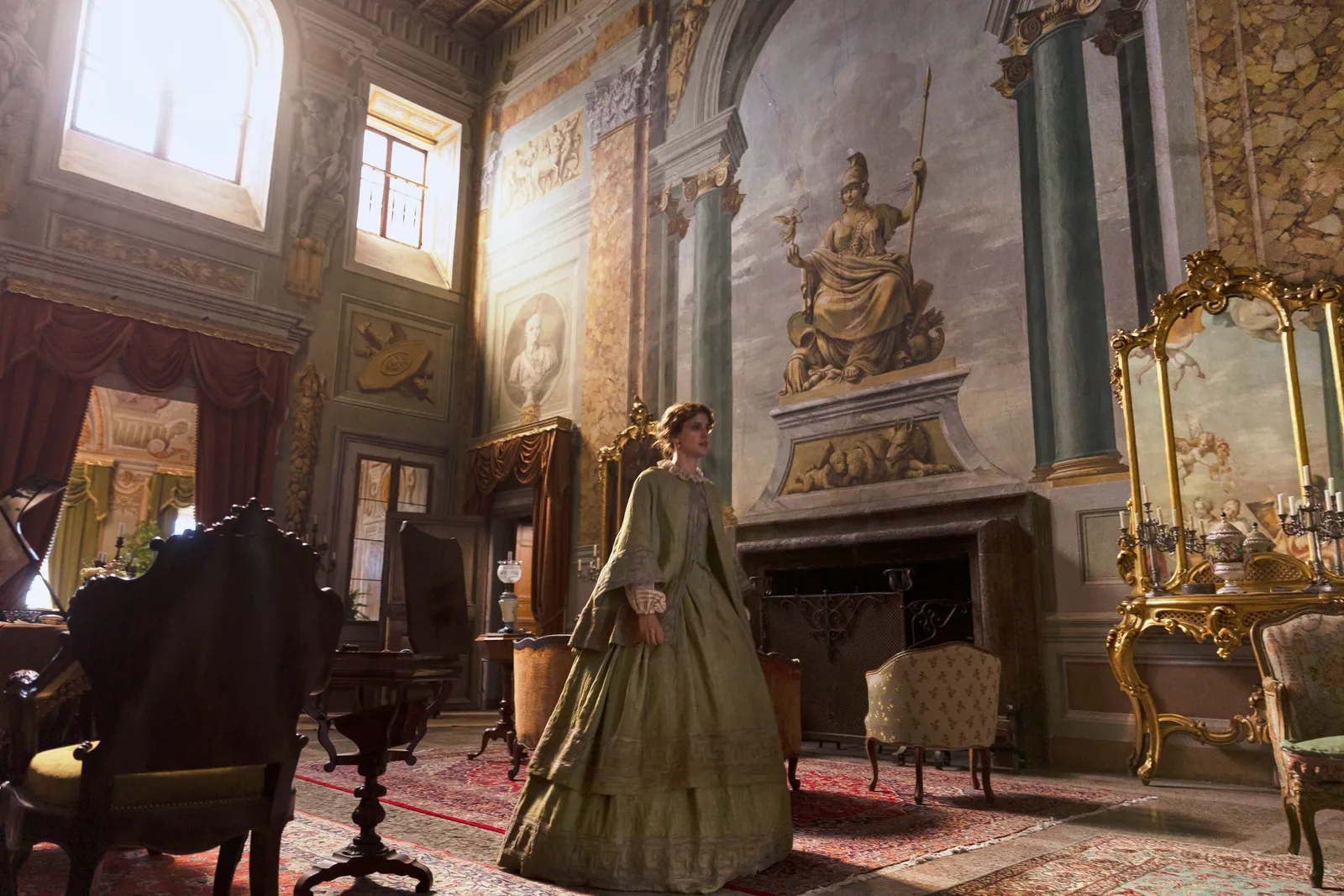
In the recently released remake of The Leopard, available on Netflix, Sicilian aristocracy is inextricably linked with beautiful aesthetics and their promotion for the furtherment of religion and government.
For those unaware, The Leopard is a novel published by Giuseppe Tomasi di Lampedusa in 1958, who was a writer, nobleman, and native of Palermo, Sicily. As someone who is a devotee of the original film production of The Leopard from 1963, I was skeptical as to how this newly released series would live up to the original. I was very pleasantly surprised, to say the least. Not only does the series remain largely true to the original film, but it enhances with stunning cinematics many of the most beloved scenes that fans of the film will remember.

Whille viewers may be drawn in by the Sicilian landscape, dramatic dialogue, or sheer aesthetic beauty, there are many themes at work throughout the series which are of particular interest to traditionalists.
The series focuses in on the life of a Sicilian prince and his family alongside that of other nobility and local officials, giving a view into the life of 19th century aristocracy in an often forgotten region. Through this, viewers will come to see things not from the side of the common man, but the aristocracy in its truest sense, where their goals diverge radically from those of the burgenoning political radicals during the Risorgimento. Due to this focus on the family and their individual lives, the viewer comes to sympatheize and have a better understanding of what the nobility stood for during this time, especially in Sicily. Far too often the nobility was charecterized even during this time as outdated, inefficent, and lavish. This series helps to dispel that myth in the cultural landscape for casual viewers, who often are fed this narrative of aristocratic excess. As the series points out, the aristocratic families, though of course wealthy, were inextricably tied to their land for their economic stability. At the very end of the series, it is seen blatantly how when an aristocratic family loses their land, they cease to be as releavent in fashionable society due to their lack of economic means. Sadly, past nobility have been tied to a late 19th and early 20th century view of capitalist industrial overlords, which could not be further from the truth. These industrial tycoons of the early 20th century had an interest in profit, and often were in a strictly American context, whereas the aristocracy in a place such as Sicily in the 19th century had been on the land for hundreds of years and were devoted to both their people and the church. I believe that this series presents a far moe compelling and truthful view to casual viewers of what it was like in such places before World War One.

As is shown throughout the series, the family is constantly seen as not only patrons of the arts, but also of a local convent. There is a particularly striking scene in which when the political revolutionaries arrive at the palace of the family, they are simply in awe at the beauty of the paintings which they were able to view, going so far as to take their hats off in a quasi-religious impulse. Further, many members of the family are routinely shown in church, along with other scenes of fervent family prayer, especially at times of death. Alongside the story is a constant character, the priest, who lived at their estate as not only a private confessor who could give daily mass, but also someone who the whole family could see as a confidant. Thus, there is always a reminder in the lives of this noble family that they have a duty not only to their own interests, but to those of their people, and the Roman Catholic Church in Sicily.

Near the end of the series there is a clear focus on the emergence of the new government, which prompts several of the family members to go north to Turin to view the new senate which the prince had been invited to join. Without including any spoilers, the prince reflects on his time in Turin to form his sentiment towards the new government, speaking about how he is tied by blood to the old regime in Sicily, and how for centuries his family has cared for and ruled the lands that they were fortunate enough to have. Having viewed the senate and its workings, the prince comments that his family were the leopards who defended for centuries what was valuable and true, whereas the new government is made up simply of jackals who have no understanding of the aristocratic duty that his family is imbued with.

Lastly, it is seen throughout the series how beauty is something to be treasured. This is so strongly the case that one of the main characters, Angelica, becomes part of the family not through her title or even primarily her father’s wealth, but a sheer devotion to Italian femininity. In our world today where traditional femininity is so often diminished, to see it praised, is refreshing. However, the series comes with a warning, particularly played out through her character, of just how dangerous beauty can be when not cultivated with virtue.

I cannot reccommend this series enough, as it raises fundamental questions regarding ideology, beauty, Catholicism, and the purpose of the drama that is our life. For viewers of period dramas, this is an eye-catching journey through a time and place forgotten by most, paired with a classic story that will keep you clicking the next episode button. For traditionalists, this is a modern masterpiece of cinematic affirmation.
“Now you need young men, bright young men, with minds asking ‘how’ rather than ‘why,’ and who are good at masking, at blending, I should say, their personal interests with vague public ideals.” – Giuseppe Tomasi di Lampedusa, The Leopard
